
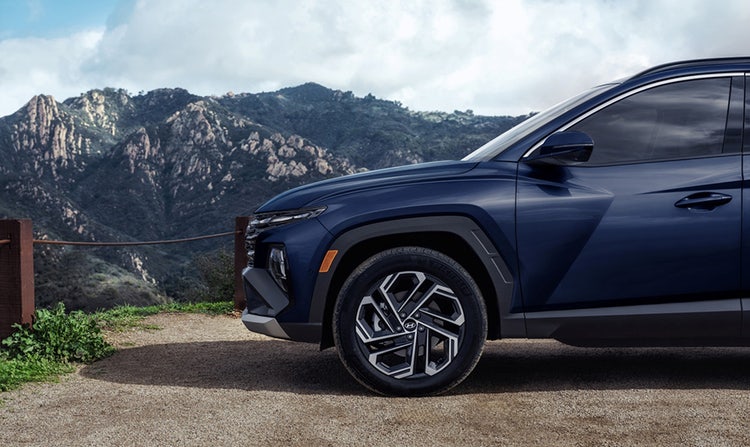
Hybrid SUVs offer great fuel efficiency and plenty of space, making them a great choice for many drivers. But not all hybrid SUVs are created equal: each has its own set of strengths, making it ideal for a different set of needs. To help you find the best fit, let’s take a closer look at factors you should consider when shopping for a hybrid SUV.
Factors to consider when buying a hybrid SUV
Your car is a companion for commutes, road trips, and everything in between. That’s why it’s important to consider the following key factors when choosing your hybrid SUV.
Fuel Efficiency
Hybrids are known for being fuel efficient thanks to their regenerative braking systems, which capture and reuse the energy that is usually lost to braking. But some hybrid cars are more efficient than others, and the differences can be significant. In fact, if you drive 20,000 km/year and pay $1.46/L for gas, you’ll need to pay $292 annually for each extra litre of gasoline that your car requires per 100 km.
Size and Dimensions
It’s important to think about how much space you need when choosing your next vehicle. Yes, SUVs are known for being spacious. But if you’re tight on parking space, a compact SUV might be a better choice. Or if you’re frequently going on road trips, a larger vehicle might be a better fit for your lifestyle. Make sure that you’re happy with a hybrid SUV’s trunk space, total cargo space, seating capacity, and legroom.
Safety Features and Ratings
Safety is of the utmost importance in any vehicle. Fortunately, many hybrid SUVs now include Advanced Driver Assistance Systems (ADAS) which help drivers avoid unsafe situations. For example, a collision-avoidance system warns about the risk of a collision and assists with braking and steering to avoid collision. When you’re shopping for a hybrid SUV, you should compare safety features to ensure your car offers as much protection as possible.
Convenience Features
A hybrid SUV’s convenience features can dramatically improve your driving experience. For example, a heated steering wheel keeps your hands warm in the winter, while a head-up display projects important information on the windshield while minimizing distractions. Similarly, Apple CarPlay and Android Auto support make it easy to stay connected, navigate to a particular location, and listen to your favourite music.
Warranty
Plenty of people find that their cars are a key part of their day-to-day lives. As a result, it can be a relief to know that your car’s warranty offers extensive coverage in case something happens. Since not all warranties offer the same level of protection, it’s a good idea to compare warranties when shopping for a hybrid SUV.
Hyundai’s Hybrid SUVs
Hyundai's 2026 vehicle line-up offers three different hybrid SUVs: the SANTA FE, TUCSON, and PALISADE. Each model comes with impressive features and safety ratings, plus an 8-year/160,000 km Hybrid System warranty.
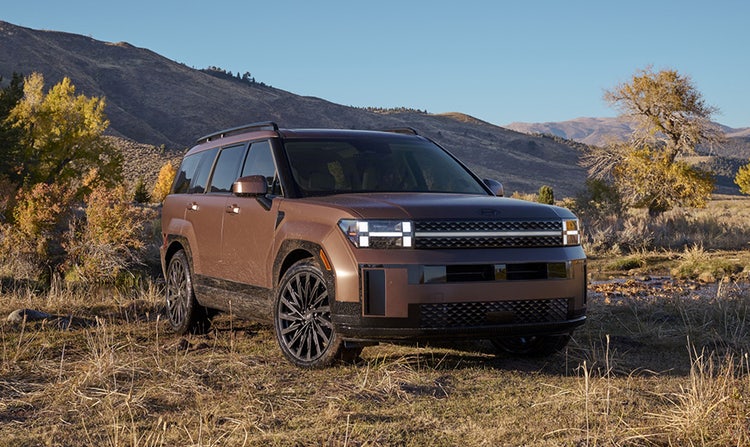
Hyundai SANTA FE
Hyundai SANTA FE comes standard as a hybrid SUV with 231 horsepower and HTRAC All-Wheel Drive, offering plenty of power for daily life. It also has an impressive combined fuel economy of 6.9 L/100 km. For comparison, the average gasoline or hybrid SUV under 6,000 lbs has a fuel economy of 9.4 L/100 km1, so hybrid SANTA FE owners can save $730 annually if they drive 20,000 km/year and pay $1.46/L for gasoline.
Inside, the hybrid SANTA FE offers seating for up to 7 passengers, a heated steering wheel, and dual zone automatic temperature control. Android Auto™ and Apple CarPlay® allow you to connect your smartphone to the infotainment system, while Rear Seat Quiet Mode lets you silence rear speakers to avoid disturbing passengers.
The SANTA FE also comes with a wide range of advanced safety features, including Forward Collision-Avoidance Assist, Rear Cross-Traffic Collision-Avoidance Assist, High Beam Assist, and Adaptive Cruise Control, which allows the vehicle to adapt its speed based on the vehicle ahead – even in stop-and-go traffic.
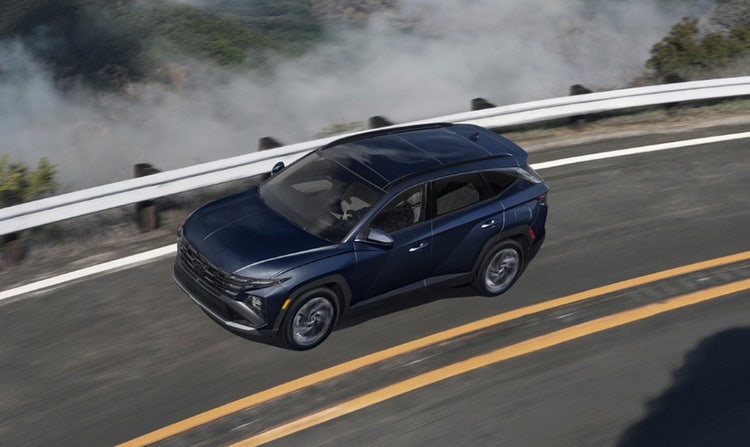
Hyundai TUCSON
Hyundai TUCSON is available as a hybrid SUV with 231 horsepower, All-Wheel Drive, and an impressive combined fuel economy of 6.7 L/100 km. Since the average gasoline or hybrid SUV under 6,000 lbs has a fuel economy of 9.4 L/100 km1, a hybrid TUCSON driver can save $788.40 on fuel each year if they drive 20,000 km/year and pay $1.46/L for gasoline.
Like the SANTA FE, the TUCSON’s cabin is very comfortable with features like a heated steering wheel, Android Auto™ and Apple CarPlay® support, and dual-zone automatic climate control. The hybrid TUCSON Ultimate also comes with a Head-Up Display which projects important information directly onto the dashboard.
When it comes to safety, the TUCSON continues to impress. The 2026 TUCSON comes with lots of Advanced Driver-Assistance Systems, including Blind-Spot Collision Warning and Forward Collision-Avoidance Assist with pedestrian, cyclist, and junction-turning detection. Smart Cruise Control also comes standard, while Smart Cruise Control 2, which also monitors driver alertness and safely stops the vehicle if the driver is unresponsive, is available on the 2026 TUCSON Ultimate trim.
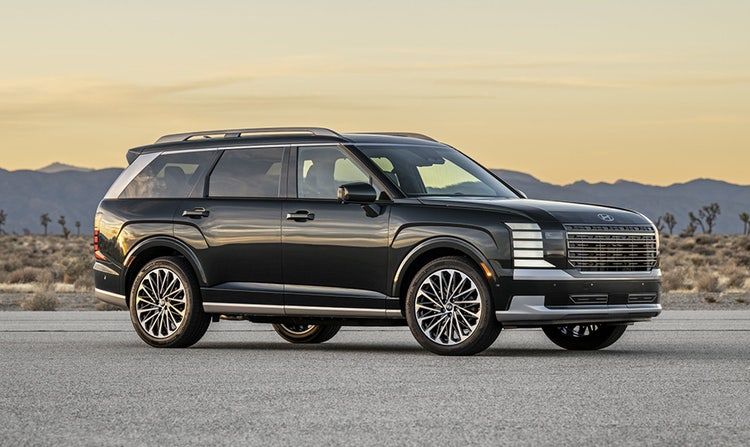
Hyundai PALISADE
The Hyundai PALISADE is available as a hybrid SUV that can produce up to 329 horsepower; it features HTRAC AWD and offers a combined fuel economy of 8.1 L/100 km. As we mentioned above, the average gasoline or hybrid SUV under 6,000 lbs has a fuel economy of 9.4 L/100 km1, so a hybrid PALISADE driver can save $379.60 on fuel annually if they drive 20,000 km/year and pay $1.46/L for gasoline.
The hybrid PALISADE features a comfortable cabin, with seating for 7 or 8 passengers depending on configuration. It also features a heated steering wheel, dual zone automatic temperature controls, 2nd row single zone automatic HVAC controls, and support for Android Auto and Apple CarPlay. A Head-Up Display comes with the Ultimate Calligraphy trim.
Additionally, the PALISADE is an incredibly safe vehicle; it includes a wide range of Advanced Driver-Assistance Systems, including Forward Collision-Avoidance Assist, Lane Keeping Assist, High Beam Assist, Driver Attention Warning, and Parking Distance Warning - Front and Reverse.
Customize Your Dream Hybrid SUV
Ready to discover your ideal hybrid SUV? Our Build and Price tool allows you to customize any model, so you can truly make it your own.
Alternatively, you can explore our hybrid SUV lineup and book a test drive at your local Hyundai dealership.
Frequently Asked Questions (FAQ)
If you still have questions about hybrid SUVs, please check our list of frequently asked questions below.
What is a hybrid SUV?
A hybrid SUV is an SUV that uses both a gasoline engine and an electric motor to power itself. The motor is powered by a small battery, which is recharged as the hybrid SUV captures energy from the car’s momentum when braking. This means that the car needs less gasoline and is ultimately more eco-friendly.
Are hybrid SUVs reliable?
Yes, hybrid SUVs are reliable. And for added peace of mind, the hybrid versions of the 2026 Hyundai SANTA FE, TUCSON, and PALISADE receive our standard 5 years of Roadside Assistance, as well as our 8-year/160,000 km Hybrid warranty.
Can you tow with a hybrid SUV?
Most hybrid SUVs allow you to tow. Check with the manufacturer for towing limits and always follow safe towing procedures.
1 Fuel-consumption averages and comparisons are based on the Government of Canada’s “2025 Fuel Consumption Ratings (2025-05-20)” fuel consumption data set as of July 14, 2025. Averages only include 2025 model year vehicles.
Disclaimer: This article only discusses models and configurations available in Canada. While this article is believed to be accurate at the time of publication, it may not reflect the latest updates to vehicles, features, or availability. Please check each model’s respective vehicle listing page on the Hyundai Canada site or contact your local dealership for the most updated information.

