A hybrid electric vehicle and a plug-in hybrid electric vehicle both utilize their powerful electric motor and a gasoline engine to generate movement. They adapt on their own based on driving conditions, activating the electric motor and/or gasoline engine to propel the vehicle. Both vehicles also use regenerative braking, the most efficient way of putting energy back into the electric battery. This is the process of recovering energy that would otherwise be lost during deceleration so it can be reused to propel the car once acceleration is required.
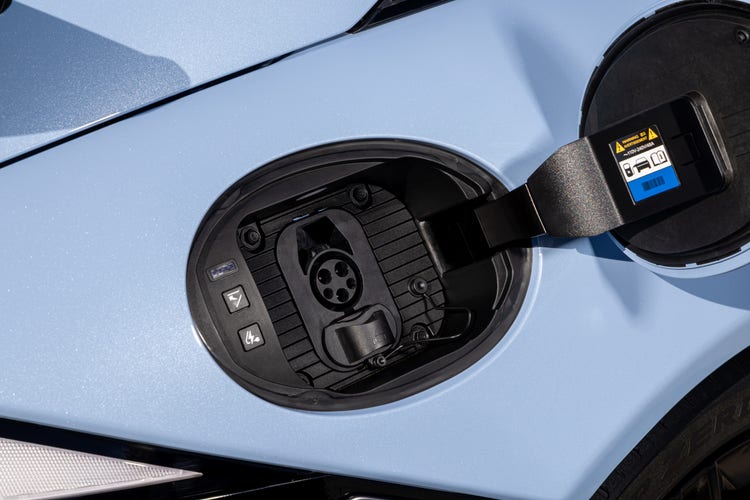
The key differences between the two is that the plug-in hybrid has a larger electric motor and greater battery capacity allowing it to be used for a greater range of operation and distance. The plug-in hybrid plugs into an external electric source. Meanwhile, the standard hybrid is solely fueled like a conventional gasoline vehicle, meaning you don't need to stop at an electric vehicle charging station.
A hybrid electric vehicle and a plug-in hybrid electric vehicle both utilize their powerful electric motor and a gasoline engine to generate movement. They adapt on their own based on driving conditions, activating the electric motor and/or gasoline engine to propel the vehicle. Both vehicles also use regenerative braking, the most efficient way of putting energy back into the electric battery. This is the process of recovering energy that would otherwise be lost during deceleration so it can be reused to propel the car once acceleration is required.The key differences between the two is that the plug-in hybrid has a larger electric motor and greater battery capacity allowing it to be used for a greater range of operation and distance. The plug-in hybrid plugs into an external electric source. Meanwhile, the standard hybrid is solely fueled like a conventional gasoline vehicle, meaning you don't need to stop at an electric vehicle charging station.
A Hybrid vehicle uses both a gasoline engine and electric motor for propulsion. An electric vehicle uses only an electric motor for propulsion – no gasoline required. The electric vehicle’s high-density battery needs to be periodically charged through an external electrical power source.
A Hybrid vehicle uses both a gasoline engine and electric motor for propulsion. An electric vehicle uses only an electric motor for propulsion – no gasoline required. The electric vehicle’s high-density battery needs to be periodically charged through an external electrical power source.
No. Hybrid vehicles automatically charge when they’re in motion and, through a clever innovation called regenerative braking, which recovers energy that would otherwise be lost during deceleration.
No. Hybrid vehicles automatically charge when they’re in motion and, through a clever innovation called regenerative braking, which recovers energy that would otherwise be lost during deceleration.
When it comes to long commutes, a hybrid vehicle provides better efficiency in all driving conditions in comparison to a standard gas or diesel vehicle. If you're planning a longer drive, our hybrid models would be the optimal choice.
Explore our SONATA Hybrid, with estimated capacity to travel up to 1,000 km, or for a family-sized vehicle, try the Hyundai TUCSON which is available in three powertrains: Gasoline; Hybrid or Plug-in Hybrid.
◊Total combined estimated driving range of up to 1,000 km on the 2026 SONATA Hybrid. Range is based on calculation of SONATA Preferred Trend Hybrid version with combined fuel economy of 5.0L/100 km (NRCan rating) and a 50L gas tank, not an official range figure.
When it comes to long commutes, a hybrid vehicle provides better efficiency in all driving conditions in comparison to a standard gas or diesel vehicle. If you're planning a longer drive, our hybrid models would be the optimal choice. Explore our SONATA Hybrid, with estimated capacity to travel up to 1,000 km, or for a family-sized vehicle, try the Hyundai TUCSON which is available in three powertrains: Gasoline; Hybrid or Plug-in Hybrid. ◊Total combined estimated driving range of up to 1,000 km on the 2026 SONATA Hybrid. Range is based on calculation of SONATA Preferred Trend Hybrid version with combined fuel economy of 5.0L/100 km (NRCan rating) and a 50L gas tank, not an official range figure.
For shorter city commuting, which often involves a lot of stop-and-go driving, a fully electric powertrain would serve best. It will produce zero emissions while effortlessly getting up to speed. As well, the energy generated from braking can be recaptured and used to recharge the vehicle’s battery through an innovative process called regenerative braking.
For shorter city commuting, which often involves a lot of stop-and-go driving, a fully electric powertrain would serve best. It will produce zero emissions while effortlessly getting up to speed. As well, the energy generated from braking can be recaptured and used to recharge the vehicle’s battery through an innovative process called regenerative braking.
The maintenance cost for Hyundai electric and hybrid vehicles in Canada varies depending on the model and the type of service needed.
The maintenance cost for Hyundai electric and hybrid vehicles in Canada varies depending on the model and the type of service needed.
Hyundai electric and hybrid vehicles come with a 5-year/100,000 km comprehensive warranty and an 8-year/160,000 km warranty for hybrid and electric components.
Hyundai electric and hybrid vehicles come with a 5-year/100,000 km comprehensive warranty and an 8-year/160,000 km warranty for hybrid and electric components.
Provincial and federal rebates are available for battery electric vehicles and plug-in hybrid electric vehicles, providing significant savings. Eligibility criteria for each program vary depending on the province. Read about available incentives on Hyundai EVs here.
Please note that HEVs are not classified as zero-emissions vehicles and are therefore not eligible for any EV rebates in Canada. For more information, please visit your local Hyundai dealer.
Provincial and federal rebates are available for battery electric vehicles and plug-in hybrid electric vehicles, providing significant savings. Eligibility criteria for each program vary depending on the province. Read about available incentives on Hyundai EVs here. Please note that HEVs are not classified as zero-emissions vehicles and are therefore not eligible for any EV rebates in Canada. For more information, please visit your local Hyundai dealer.