
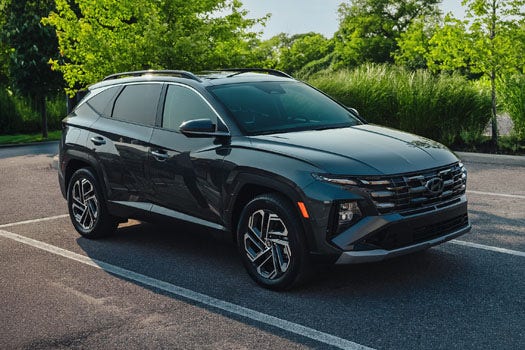
Looking for a new vehicle? Whether leasing or financing, both plans offer affordable payments and flexible terms. But, the two types of agreements work differently, and as a result, each one is better suited for a different set of needs.
If you’re considering a lease or finance plan, it’s important to understand how each structure works. To help, we’ll walk through the basics of both car lease and finance agreements, then outline the situations that each option is best suited for.
How does financing a car work?
When you finance a car, you borrow money to buy the car, and then pay it back over time with interest. You typically put a down payment on the car, then make monthly payments until you pay off the entire balance, at which point you own the car. After that, you can sell it, trade it in, or continue driving it for as long as you’d like.
Most finance plans allow you to pay off your balance early with minimal fees, giving you the choice to reduce future financial obligations. You can also sell the car during the finance term, as long as you pay the balance of the loan before transferring the title to the new owner. Still, this option provides you with the flexibility to adjust your plans during your term if needed. And, since you will eventually own the car outright, you are free to use and modify the car as desired.
How does leasing a car work?
Leasing a car is like renting it for an extended period, usually two to four years. You make regular payments, just like with financing, but you are not paying to own the car–you’re only paying for the value it loses while driving it. That’s why lease payments are generally less than finance payments.
Because lease payments are based on how much value the car is expected to lose, there are rules to help keep the car in good shape. For example, you can only drive a certain number of kilometers each year, and you need to avoid excessive damage. These limits help the car hold its value. You can usually adjust them before signing the lease; and if you choose tighter limits, your monthly payment may be lower.
By nature, leases are a bit less flexible than finance plans when it comes to changing course partway through the term. A vehicle loses value faster when it is newer, but lease agreements distribute the expected cost of lost value throughout the entire lease term. This means that if you want to end your lease early, you likely have not covered its loss of value up to that point. As a result, lease providers typically charge fees to end a lease early.
What happens when a car lease ends?
When your lease ends, you can usually either return the car or buy it for its remaining value. Each option has its own benefits.
If you return your vehicle and start a new lease, you can get a newer model with the latest tech and safety features. You can also choose to switch to a different type of vehicle as your needs change. For example, you might opt for a 3-row SUV like the PALISADE if you suddenly find yourself driving little league players to practice or a compact sedan like the ELANTRA if you need a smaller vehicle. Plus, since you’re driving newer cars, you usually avoid big repair bills.
But, if you really like your current car, you can choose to buy it out instead of giving it back. Then you don’t have to worry about wear-and-tear rules anymore—it’s yours.
Should I finance or lease my next vehicle?
Both leasing and financing have their own benefits. But because they work differently, one might fit your needs better than the other. It all depends on what matters most to you.
You should consider financing a car if:
- You’d prefer to own your vehicle outright.
- You want to keep the same vehicle for a long period of time.
- You’d like to drive your vehicle without worrying about mileage or wear and tear limits.
- You’re interested in modifying your vehicle.
On the other hand, you should lease your car if:
- You’d like your monthly payments to be as low as possible.
- You want to constantly drive the latest vehicles and enjoy new features.
- You’d prefer to avoid as much car maintenance as possible.
Lease or Finance Your Next Vehicle with Hyundai
Regardless of whether you choose to lease or finance your next vehicle,<span> </span> Hyundai offers a wide range of benefits:
- Leased vehicles: Hyundai’s leases<span> </span>are versatile, so you can choose your lease length and mileage limit. Lease mileage limits are flexible annual limits that can lower your payments depending on your annual kilometers driven. Hyundai leases also come with Guaranteed Asset Protection (GAP), which covers the difference between your lease balance and your insurance payout if your car is written off. Plus, leased vehicles are covered under Hyundai’s warranty for up to 5 years.
- Financed vehicles: If you buy a vehicle with Hyundai’s finance program,<span> </span> you get warranty coverage and 24/7 Roadside Assistance<span> </span>for 5 years. Hyundai also offers competitive interest rates, which can help keep your monthly payments low.
Ready to explore your options?
Use our Build and Price tool <span> </span>to build your dream vehicle and explore payment options, including lease and finance payments across a variety of term lengths. Alternatively, you can schedule a test drive <span> </span>to experience your ideal Hyundai firsthand.
Frequently Asked Questions (FAQ)
Do you still have questions about leasing or financing a vehicle? Check out our list of frequently asked questions below, or contact Hyundai Motor Finance<span> </span>for more information about Hyundai’s offerings.
Is it better to lease or buy a car?
Generally, the answer depends on your circumstances. If you want to upgrade your car often and access the latest features, a lease might be better for you. Or, if you’re looking to keep your car long-term and don’t want to worry about mileage or wear-and-tear limits, buying or financing your car may be a better option.
Can I sell a financed car?
If you want to sell your financed car before the end of its term, you’ll need to pay off the balance of the loan. You can either pay the balance before selling the car or find a buyer who will pay the balance themselves.
Disclaimer: This blog post is for informational purposes only and may not be comprehensive or reflective of changes to policies or availability. For the most accurate and up-to-date information about Hyundai lease and finance plans, please contact Hyundai Motor Finance.<span> </span> Any references to Hyundai lease or finance plans above refer to those offered in Canada by Hyundai Motor Finance.