If you’re looking for a new vehicle that prioritizes traction and stability, you’ve likely come across cars with 4-Wheel Drive (4WD or 4x4) or All-Wheel Drive (AWD) drivetrains. Both systems can engage all four wheels for improved power and handling, but it can be hard to identify the differences. We’ll look at how each system works and help you choose the right car for your needs.
What is 4WD?
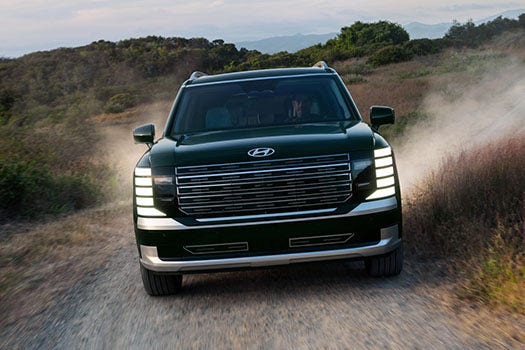
4WD is a type of drivetrain that allows drivers to deliver identical levels of power to both wheel axles, making the vehicle stronger when needed. Driver input is key here, as 4WD does not turn on automatically. However, 4WD can significantly improve a vehicle’s performance–especially in off-road situations where some wheels may not have adequate traction.
It’s important to note that 4WD systems lock the front and rear wheels’ speeds together, which is an issue when turning since individual wheels need to move at different speeds. Activating 4WD while turning on a dry, hard surface can cause drivetrain binding, which can significantly compromise handling and damage the vehicle. Because of this, it’s strongly recommended that 4WD is not activated when driving on dry pavement. Instead, 4WD systems are best suited for snowy or icy pavement and off-road conditions, including driving over mud, dirt, and rocks.
Additionally, drivers should be aware that 4WD systems are usually larger and heavier than AWD, front-wheel drive (FWD), and rear-wheel drive (RWD) systems. As a result, vehicles with 4WD typically have poorer fuel economy than cars with other drivetrains, all else being equal.
What is AWD?
Like 4WD, AWD is a type of drivetrain that can dramatically improve a vehicle’s strength by actively powering all four wheels. However, while 4WD systems require driver input to send identical power to both axles, AWD systems continuously monitor road conditions and adjust individual torque levels accordingly. Modern systems may choose to only power the front or rear wheels under good road conditions for better fuel economy, but engage all four wheels as needed for better handling. Many systems can control the power for each wheel, offering an even greater degree of optimization compared to 4WD.
Since power is not locked between axles, AWD systems excel at on-road driving. Additionally, their precise control over power outputs allows for better control over unique situations, including light off-road driving. AWD systems also improve stability and traction, leading to better handling and acceleration. Ultimately, AWD systems are great for messy road conditions, making them ideal for the snow and ice that many Canadians face in winter.
Should I Choose a 4WD or AWD Vehicle?
Both 4WD and AWD systems have unique advantages, making each one better for different circumstances. Your ideal drivetrain will depend on your driving circumstances:
- Consider choosing a 4WD vehicle if: you primarily need extra power for off-roading, and do not want better performance or handling on dry pavement.
- Consider choosing an AWD vehicle if: you’re looking for a vehicle that dynamically adjusts each axle’s power based on road conditions to maximize handling and fuel economy and are primarily planning on driving on pavement or mild-moderate off-road conditions.
Hyundai’s HTRAC™ All-Wheel Drive
Hyundai’s HTRAC™ All-Wheel Drive system, which stands for Hyundai TRACtion, is an advanced AWD system with a wide range of benefits. HTRAC™ AWD monitors over 50 vehicle inputs more than 100 times per second to calculate the torque needed for each wheel. Additionally, each wheel is powered separately, allowing for precise control over vehicle performance.
By default, HTRAC™ AWD automatically selects the best torque levels for each wheel. It operates in front-wheel drive or rear-wheel drive when safe to do so, but applies torque to all four wheels as needed, offering the best possible fuel economy while maintaining handling and traction.
Drivers can customize their vehicle’s performance by selecting different Drive and Terrain modes. Drive modes may include Normal mode, which offers a balance between fuel economy and handling; Eco mode, which prioritizes fuel economy; Sport mode, which sends more power to the rear wheels for a sportier driving experience; and Smart mode, which is more reactive to sensors. Terrain modes tailor your Hyundai’s performance to the type of material that you are driving on, and may include Mud mode, Snow mode, and Sand mode. Note that some Drive and Terrain modes are only available on specific vehicles and/or trims. However, no matter which AWD model you choose, HTRAC™ AWD will provide confident power and handling.
Vehicles with HTRAC™ AWD
Hyundai offers a wide range of vehicles with HTRAC™ AWD, including sedans and SUVs with a variety of powertrain options. If you’re looking for an HTRAC™ AWD-compatible model, check out the following cars:
- IONIQ 5: The IONIQ 5 is an electric compact crossover SUV with HTRAC™ AWD available on the Preferred Long Range AWD configuration.
- IONIQ 5 N: The IONIQ 5 N, our racetrack-ready, high performance version of the IONIQ 5, comes standard with HTRAC™ AWD.
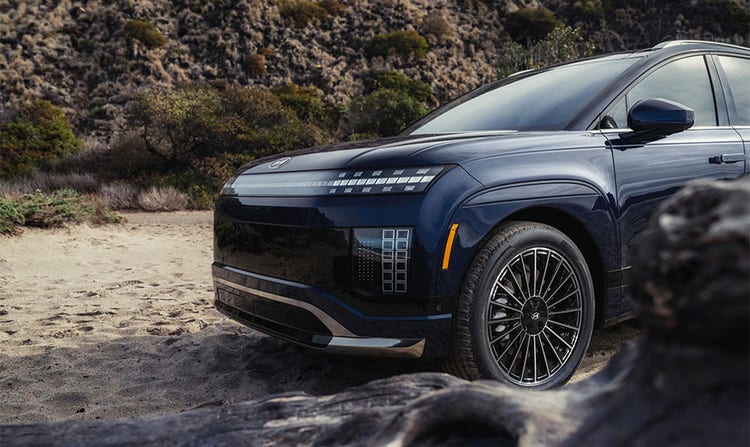
- IONIQ 9: The IONIQ 9 is an all-electric 3-row SUV with available HTRAC™ AWD on the Preferred AWD and Preferred AWD+ configurations.
- TUCSON: The TUCSON is a compact crossover SUV available with gasoline, hybrid, or plug-in hybrid powertrains. All configurations come with HTRAC™ AWD.
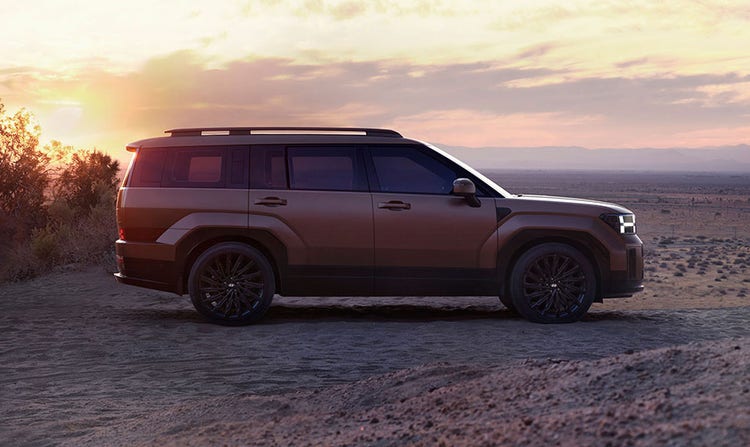
- PALISADE: The PALISADE is a mid-size 3-row SUV available with a gasoline or hybrid powertrain; all trims feature HTRAC™ AWD. Additionally, the XRT Pro model comes with Off-Road Mode, which displays important information like oil pressure, battery voltage, and wheel torque distribution on-screen so you can venture off the beaten path with better precision and confidence.
- SANTA FE: The SANTA FE is a hybrid mid-size 3-row SUV that comes standard with HTRAC™ AWD.
- KONA: The KONA is a subcompact crossover SUV; HTRAC™ AWD is available on the Essential and Preferred configurations, and standard on the N Line trim.
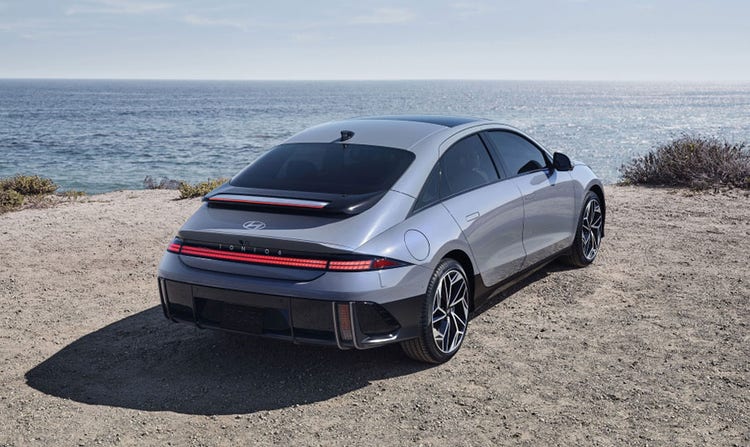
- IONIQ 6: The IONIQ 6 is an electric mid-size sedan; its Preferred Long Range AWD configuration comes with HTRAC™ AWD.
- SONATA: The SONATA Preferred-Trend AWD is a mid-size sedan that features HTRAC™ AWD.
Customize Your HTRAC™ AWD Vehicle
Looking for a car with a powerful drivetrain? Our Build & Price tool can be used to personalize the HTRAC™ AWD models mentioned above. Or, if you’d prefer to experience the HTRAC™ AWD driving experience firsthand, you can book a test drive at your local Hyundai dealership.
Frequently Asked Questions (FAQ)
Still curious about 4WD and AWD? Check out our list of frequently asked questions below, or reach out to your local Hyundai dealership for questions about Hyundai HTRAC™ AWD.
Is 4WD better than 2WD in snow?
Yes, 4WD is better than 2WD in snow, and is especially helpful in heavy snow. 4WD increases the vehicle’s power and traction, which can be helpful in slippery conditions.
Is AWD better than 2WD in snow?
Yes, AWD is better than FWD or RWD in the snow, as the extra power and traction helps to maintain handling. AWD is also typically better than 4WD when driving on snowy roads, as the drivetrain can optimize the amount of torque that each axle receives. However, AWD is not a substitute for winter tires, which should always be used for optimal handling and traction in snow.
How does HTRAC™ AWD work?
Hyundai HTRAC™ AWD automatically adjusts the amount of torque that each wheel receives based on detected road conditions. It uses FWD or RWD when safe to do so for optimal fuel economy but engages all four wheels when necessary for improved power and handling. HTRAC™ AWD can adjust torque levels for all four wheels independently, offering a more precise degree of control. Additionally, Drive modes allow drivers to adjust the behaviour of their HTRAC™ AWD system, while Terrain modes optimize driving for different ground conditions.
Disclaimer: This article is for informational purposes only. It may not reflect the latest updates to vehicle models, features, or availability. For the most accurate and up-to-date information about Hyundai vehicles, please visit the current model pages on the Hyundai Canada website or contact your local dealership. Hyundai Canada does not assume liability for reliance on this content.