
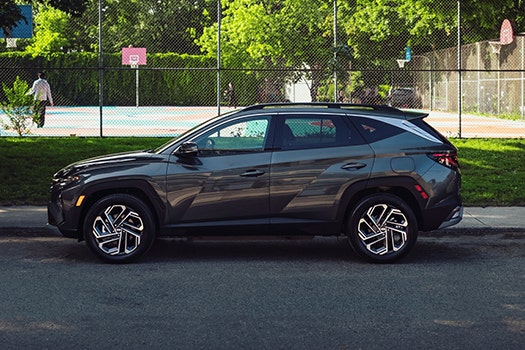
If you’re looking for an SUV that offers the advantages of both hybrid and electric vehicles, you may want to consider a plug-in hybrid SUV. Plug-in hybrids allow you to switch between hybrid and electric systems depending on your needs. When used to their fullest, they can truly provide the best of both worlds.
That said, there are a lot of misconceptions about plug-in hybrids. To help your understanding, we’ll walk through the advantages of plug-in hybrid SUVs, and some key factors to keep in mind when shopping.
What is a plug-in hybrid electric SUV?
A plug-in hybrid SUV is an SUV that can run using either electric power or a combination of gasoline and battery power, just like a hybrid. Drivers can refuel their car by filling its gas tank, or recharge its battery using an electric vehicle charging station. Additionally, like traditional hybrid vehicles, plug-in hybrids use regenerative braking to capture the energy that is otherwise lost when brakes are applied, ultimately improving their fuel efficiency.
Since a plug-in hybrid SUV’s battery is smaller than an electric car’s battery, plug-in hybrids cannot travel as far as traditional EVs on electricity alone. But drivers have the option of switching to gasoline when travelling for longer distances. Additionally, many plug-in hybrid SUVs can run using both gasoline and electric power at the same time, ultimately improving their performance while maintaining or improving their fuel efficiency. Some plug-in hybrids, like the plug-in hybrid Hyundai TUCSON Ultimate, also allow drivers to switch between power sources, offering drivers the flexibility to choose the power source that works best for their situation.
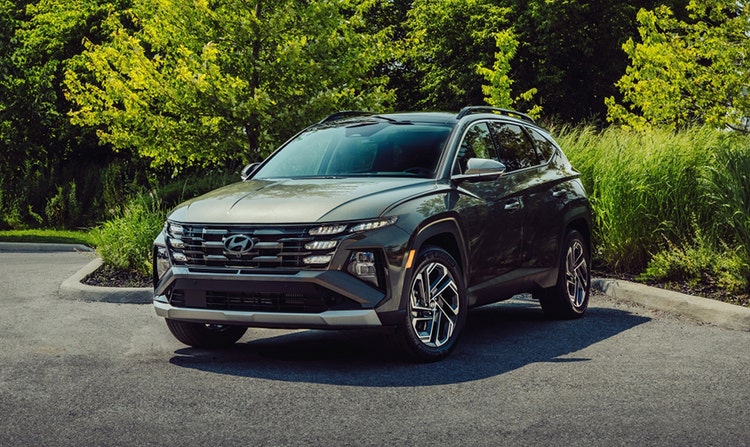
What’s the difference between a hybrid and a plug-in hybrid SUV?
Plug-in hybrid SUVs have much larger batteries than traditional hybrid SUVs, allowing them to drive solely on electric power for extended periods. These batteries can be recharged by plugging into a home or public charging station, and they also recharge through regenerative braking, which captures and repurposes energy that is otherwise lost when slowing down. Traditional hybrid cars use regenerative braking to recharge their batteries too, but cannot be plugged in. Since their batteries are smaller, they always use gasoline to operate–the battery is just a supplement to improve their fuel efficiency.
Advantages of Plug-In Hybrid SUVs
Plug-in hybrid SUVs offer a wide range of benefits thanks to their flexibility:
- Use electric power for most, if not all, daily driving: Plug-in hybrid SUVs generally have a large enough electric range for moderate day-to-day driving without gas.
- Enjoy the flexibility of gasoline on longer trips: Even though there are plenty of available EV charging stations, it’s reassuring to know that you can drive for extended periods of time without having to check where a charger is located.
- Adjust your car’s performance as needed: If you find yourself in a situation that could benefit from a bit of extra power, you may be able to use your car’s gas and electric power at the same time to increase its horsepower.
- Take advantage of short charging times: Since plug-in hybrid batteries are relatively small, many models can fully recharge within a few hours–which can be helpful when parking somewhere with free charging.
- Enjoy better fuel economy: Thanks to regenerative braking capabilities and the ability to partially or totally power the vehicle with electricity, plug-in hybrid SUVs usually feature significantly better fuel economy than their gasoline counterparts.
- Qualify for government rebates (subject to availability and restrictions): Plug-in hybrid vehicles qualify for many electric vehicle government rebates. Note that some programs require plug-in hybrid vehicles to have a minimum all-electric range to qualify for some or all of the rebate. Availability and eligibility not guaranteed, please consult your local province or territory for more information.1
Factors to Consider when Purchasing a Plug-In Hybrid SUV
When choosing a vehicle, it’s important to make sure that it meets all your needs. Pay close attention to the following factors when choosing a plug-in hybrid SUV:
- Estimated electric range: Some plug-in hybrid SUVs have smaller battery capacities than others. Compare your chosen model’s all-electric range (AER) to your typical driving routine for a better idea of how often you’ll need to refuel. Additionally, ensure that your chosen plug-in hybrid SUV’s AER falls within any requirements for electric vehicle government rebates that you may qualify for.1
- Charging time: Check how long it will take your plug-in hybrid SUV to charge. Shorter charge times mean that you can recharge your battery faster while running errands or on the go.
- Fuel economy and power efficiency: While plug-in hybrids are more efficient than gasoline equivalents, it’s still a good idea to look at energy efficiency when comparing models. Keep in mind that efficiency will vary by power source (e.g. electricity, gasoline, or a combination of the two).
- Performance: Different plug-in hybrid SUVs offer different performance capabilities. Consider comparing models’ horsepower and keep an eye out for performance-boosting features like All-Wheel Drive.
- Safety features: Safety is of the utmost importance when on the road. Check for safety features and Advanced Driver-Assistance Systems (ADAS) that can help to keep you and your passengers safe.
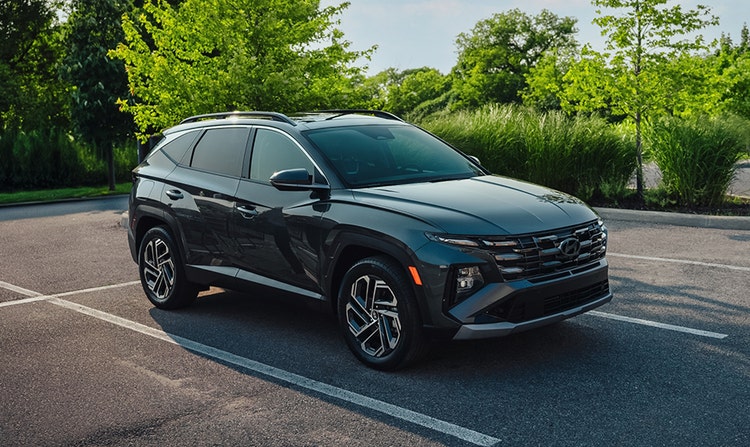
Hyundai TUCSON Plug-In Hybrid SUV
The Hyundai TUCSON is an award-winning SUV with an available plug-in hybrid configuration.
With an estimated all-electric range of 51 km, the plug-in hybrid TUCSON Ultimate lets you drive for a long time before needing to recharge (or switch to gas). The TUCSON’s range also qualifies it for a variety of provincial/territorial electric vehicle rebates.1 And when it’s time to recharge, you don’t have to wait long: the battery can recharge in just 2 hours using a Level 2 220V/240V charger.
What’s more, the plug-in hybrid TUCSON provides plenty of power without sacrificing efficiency. The vehicle features standard AWD and can provide up to 268 horsepower, with a 6.7 L/100 km fuel economy when combining gas and electric power sources or a 3.1 Le/100 km rating when using electric power alone. No matter how you choose to drive, you can rest assured that the plug-in hybrid TUCSON is an energy-efficient choice.
The plug-in hybrid TUCSON also comes with a wide range of available safety features and ADAS, including Forward Collision-Avoidance Assist, Blind-Spot Collision Warning, Parking Collision-Avoidance Assist (Rear), Blind View Monitor, and Surround View Monitor. Additionally, it features Highway Driving Assist and Adaptive Cruise Control 2 with stop-and-go support for a more convenient driving experience.
Discover the plug-in hybrid TUCSON today
Interested in the plug-in hybrid Hyundai TUCSON? You can customize your ideal configuration using our Build and Price tool. Alternatively, you can book a test drive at your local dealership to experience the plug-in hybrid TUCSON firsthand.
Frequently Asked Questions (FAQ)
If you still have questions about plug-in hybrid SUVs, please consult our list of frequently asked questions below. You can also contact your local dealership for personalized help.
Can a plug-in hybrid work without being recharged?
Yes, a plug-in hybrid can use gasoline to run if it isn’t recharged. In that situation, regenerative braking would still recharge the battery over time, so the vehicle would work similarly to a traditional hybrid car while still having better fuel economy than a gasoline vehicle.
Do plug-in hybrid cars recharge while driving?
Yes, plug-in hybrid cars use regenerative braking to capture the extra energy that is otherwise lost while braking. That energy is used to recharge the battery, ultimately providing better fuel efficiency.
Are all hybrid cars plug-in?
No, not all hybrid cars are plug-in hybrids. The term “hybrid car” typically refers to a car that uses regenerative braking to recharge a small battery, while plug-in hybrid cars have larger batteries that can be charged at home or at a public charging station (although they also support regenerative braking to maximize their range).
Does Hyundai make a plug-in hybrid vehicle?
Yes, the TUCSON is the only Hyundai model available in Canada that is currently available as a plug-in hybrid vehicle.
Is the TUCSON hybrid a plug-in hybrid vehicle?
The TUCSON is available in gasoline, hybrid, and plug-in hybrid configurations. If you’d like more information about the differences between the different configurations and their powertrains, please consult the TUCSON specs page or reach out to your local dealership.
How long does it take to charge a plug-in hybrid TUCSON?
It takes about 2 hours to charge a plug-in hybrid TUCSON using a standard 220 V/240 V Level 2 charger.
1Provincial electric vehicle rebates and incentives (each, an "Incentive") each represent a maximum incentive or rebate amount provided by the federal government and the provincial governments (each, a "Jurisdiction") on eligible vehicles. The amount of the Incentive, the terms and conditions, and the eligibility criteria or application of the Incentive may vary by Jurisdiction, model and trim level, MSRP, payment method, term, and any other criteria that may be established by a Jurisdiction. Some Jurisdictions may impose income limits for Incentive eligibility. Incentives are applied after applicable taxes in the Jurisdiction. The Incentive programs are administered independently by each Jurisdiction and are subject to cancellation or change. Hyundai Auto Canada Corp. is not responsible for the administration of Incentive programs, and any changes or cancellations thereto, and makes no representations about the actual amount or eligibility for the Incentive. Incentive information is provided for informational purposes only. Conditions and limitations apply. Consult the applicable Jurisdiction or see your dealer for details.
Disclaimer: This article only discusses models and configurations available in Canada. While this article is believed to be accurate at the time of publication, it may not reflect the latest updates to vehicles, features, or availability. Please check each model’s respective vehicle listing page on the Hyundai Canada site or contact your local dealership for the most updated information.