Your vehicle’s transmission has a big impact on your driving experience. Whether you’d like to enjoy fine-tuned control over your car’s performance at all times or want your vehicle to automatically switch to the best possible gear, it’s important to choose a transmission that matches your driving preferences.
That said, it can be difficult to know which transmission best matches your needs. To help simplify the decision, we’ll walk through four common types of transmissions–Automatic Transmissions (AT), Manual Transmissions (MT), Intelligent Variable Transmissions (IVT), and Dual Clutch Transmissions (DCT)–and explain the unique strengths of each one.
What is a vehicle transmission?
A vehicle’s transmission is the system that transfers power from the engine to the wheels. It also adjusts the speed of the engine’s output for better performance and fuel efficiency.
Much like a bicycle, transmissions usually have a number of different gears, allowing the vehicle to drive efficiently under a variety of conditions. However, different transmission systems take different approaches to their tasks, ultimately providing their own unique driving experiences.
Automatic transmission (AT)
An incredibly popular option nowadays, automatic transmissions monitor driving conditions and then automatically switch to the best gear for the situation.
Since drivers do not need to worry about adjusting their gear, automatic transmissions are usually considered easier and more relaxing to drive. They also allow for smoother and more efficient acceleration, as the vehicle’s computer can shift the gear at the precise optimal moments. These benefits are especially noticeable when driving in stop-and-go traffic or in areas with lots of hills.
Hyundai vehicles with an automatic transmission
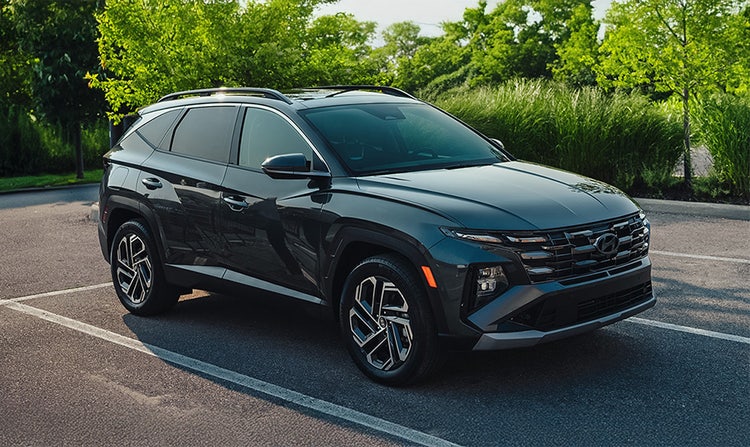
Looking for a vehicle with an automatic transmission? Hyundai offers a variety of options, including the KONA, TUCSON, SANTA FE, PALISADE, and SONATA.
The KONA is a compact SUV with an available 8-speed automatic transmission.
The TUCSON is an SUV that comes standard with an 8-speed automatic transmission, with an available 6-speed automatic transmission. All TUCSON configurations feature SHIFTRONIC® Manual Mode, which allows drivers to manually adjust the vehicle’s gears whenever they’d prefer a greater degree of control. Additionally, hybrid models offer regenerative braking.
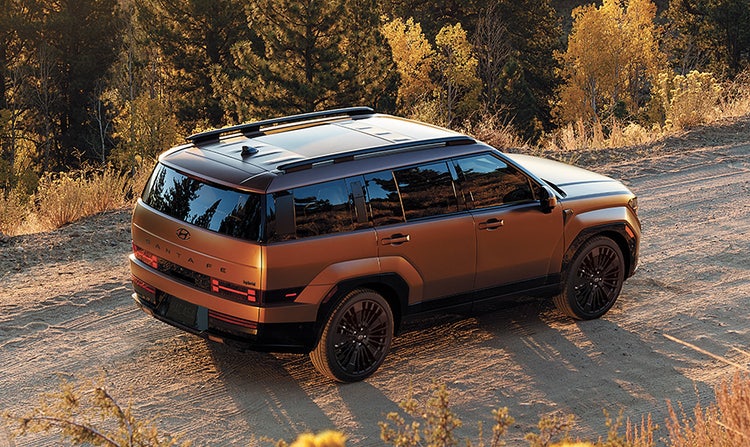
The SANTA FE is a 3-row SUV that comes standard with a 6-speed automatic transmission. Like the TUCSON, all SANTA FE models feature SHIFTRONIC® Manual Mode and hybrid configurations offer regenerative braking.
The PALISADE is a 3-row full-size SUV with a standard 8-speed or available 6-speed automatic transmission. All configurations offer SHIFTRONIC® Manual Mode.
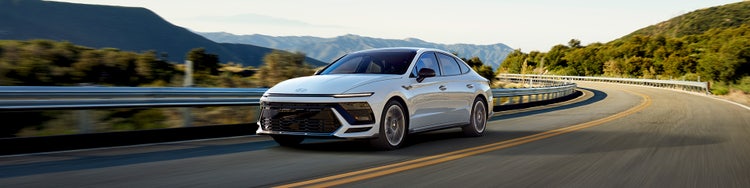
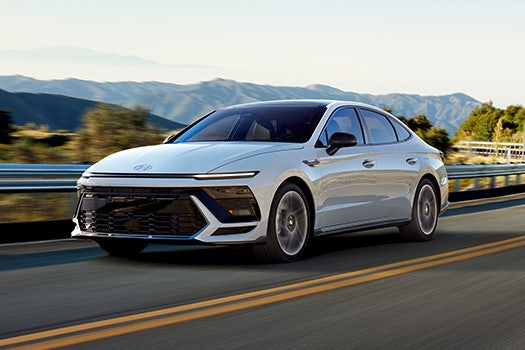
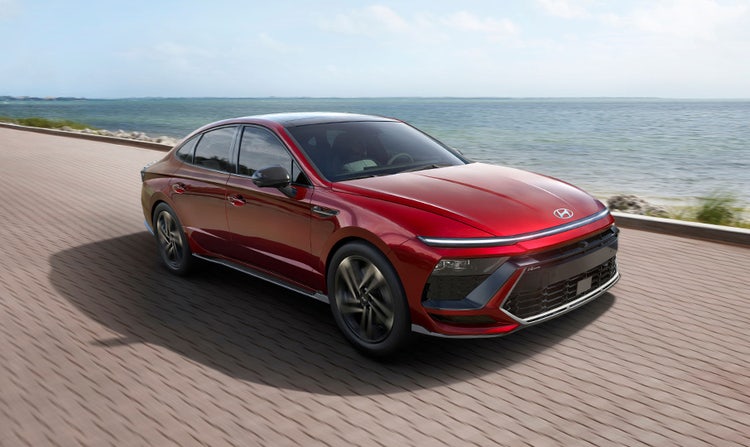
The SONATA is a midsize sedan that comes standard with an 8-speed Smartstream automatic transmission and paddle shifters which can be used to manually adjust the car’s gear setting; an 6-speed automatic transmission is available.
Manual transmission (MT)
Manual transmissions require drivers to manually adjust the gear that their vehicle is using by disengaging the current gear, then engaging their desired gear. This process causes those in the vehicle to feel when the gear changes, providing drivers with a more engaging driving experience. It also offers drivers a greater degree of control over the vehicle’s performance compared to an automatic transmission.
But the benefits don’t stop there: while automatic transmissions only adjust their gear in response to current detected driving conditions, drivers can adjust their manual transmission in anticipation of upcoming needs.
Hyundai vehicles with a manual transmission
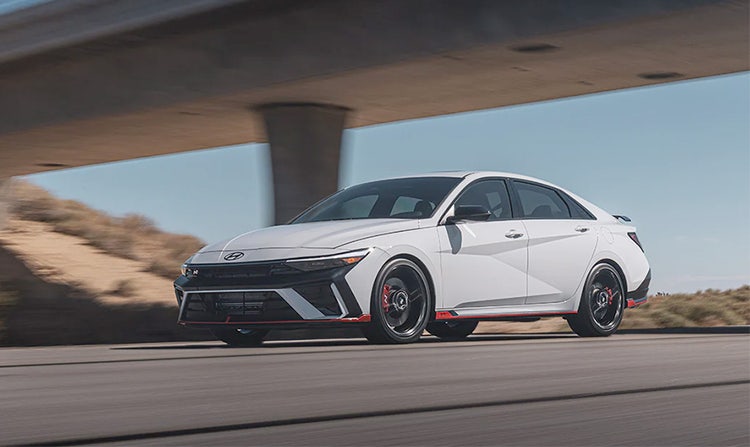
Currently, Hyundai Canada offers a single vehicle with a manual transmission: the high-performance ELANTRA N. With a racecar-inspired engine that can produce up to 276 horsepower, a standard 6-speed manual transmission for precise control, and the ability to engage the DCT configuration’s exclusive N Grin Shift for an extra burst of acceleration, the ELANTRA N provides an incredible driving experience both on and off the track.
Intelligent Variable Transmission (IVT)
Hyundai’s Intelligent Variable Transmissions are similar to automatic transmissions in that they automatically adjust the vehicle’s gear setting. However, while automatic transmissions adjust their gear setting by moving different gears, IVTs use belts and pulleys instead.
Traditionally, an automatic or manual transmission’s gear structure requires the transmission to disengage and then reengage each time the gear is adjusted, which leads to a brief pause in acceleration. However, an IVT’s belt and pulley mechanic does not have to be disengaged when adjusting gear settings. This means that passengers do not experience a dip in acceleration when gears settings are changed, resulting in a smoother ride.
Hyundai vehicles with an intelligent variable transmission
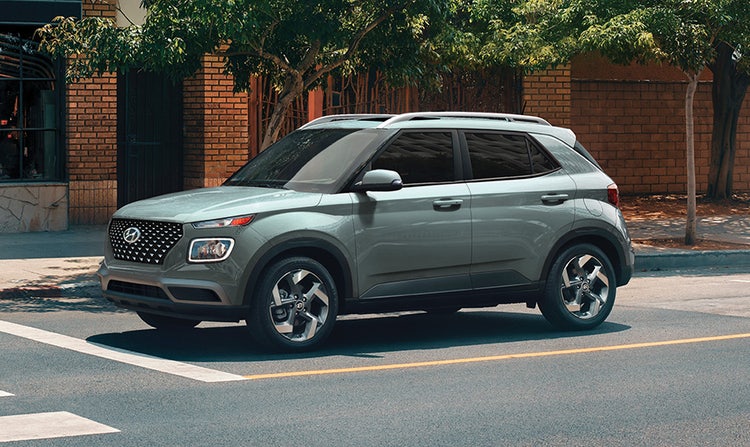
Hyundai currently produces several different vehicles with IVTs, including the KONA, ELANTRA, and VENUE.
The KONA comes standard with an Intelligent Variable Transmission.
The ELANTRA, a sleek sedan and the VENUE, a compact crossover, both come standard with an Smartstream Intelligent Variable Transmission. The Smartstream IVT offers improved responsiveness and gas mileage, resulting in an even better driving experience.
Dual Clutch Transmission (DCT)
A dual clutch transmission is a type of automated manual transmission. It features an interior structure that resembles a manual transmission, but with two independently functioning clutches (which each contain a set of gears) rather than one.
Like an automatic transmission, a DCT automatically adjusts its gear setting based on detected circumstances. However, since it has two sets of gears, it can essentially pre-load the next setting in the unused clutch, resulting in a smoother, more responsive driving experience when switching gears. Additionally, since the vehicle quickly reaches its optimal gear, DCTs are often associated with better fuel efficiency and performance.
Hyundai vehicles with a dual clutch transmission
Hyundai offers several vehicles with a DCT, including the ELANTRA N, SONATA N Line, SANTA FE, and SANTA CRUZ.
The ELANTRA N offers an available 8-speed DCT. This configuration comes with paddle shifters that allow drivers to manually adjust the vehicle’s gear, providing them with precise control over the vehicle’s performance.
Similarly, the SONATA N Line comes with an 8-speed DCT with paddle shifters that can adjust the vehicle’s gear if desired. The transmission also offers REV match, which provides a smoother driving experience when manually shifting to a lower gear.
Additionally, the SANTA CRUZ, a Sport Adventure Vehicle with open-bed cargo storage, comes standard with an 8-speed Dual Clutch Transmission with SHIFTRONIC® Manual Mode, which allows drivers to adjust their gear setting as desired.
Discover Your Next Vehicle
Regardless of whether you’d prefer a manual transmission, automatic transmission, IVT, or DCT, Hyundai’s diverse vehicle lineup makes it easy to find a car that meets your needs. Plus, once you’ve chosen a model, you can customize it further using the Build & Price tool.
If you’d prefer to try Hyundai’s various transmissions before choosing your next vehicle, you can reach out to your local Hyundai dealership to book a test drive.
Frequently Asked Questions (FAQ)
If you still have questions about the different types of transmissions, please check out the list of frequently asked questions below.
Is an IVT automatic or manual?
IVT is a type of automatic transmission, but it differs from a traditional automatic transmission. While automatic transmissions usually rely on gears to transfer power from the engine to the wheels, IVTs use pulleys and a belt–a combination that ultimately allows them to make precise adjustments to their gear ratio.
Is a DCT automatic or manual?
A Dual Clutch Transmission (DCT) is an automated manual transmission. While its gear arrangement is similar to that of a manual transmission, a DCT automatically adjusts the gear setting–much like an automatic transmission.
Is DCT faster than manual?
A DCT can shift gears more quickly than a manual transmission.
Can you drive a DCT vehicle like an automatic vehicle?
Yes, a DCT vehicle can be driven like a vehicle with a traditional automatic transmission since it does not require the driver to manually adjust gears.
What is the difference between a DCT and automatic transmission?
The biggest difference between a DCT versus an automatic transmission is the way in which the transmissions handle gear shifts. An automatic transmission must disengage and then reengage when shifting gears, leading to a brief pause in acceleration that passengers may feel. On the other hand, since a DCT has two different clutches, it can operate with one clutch, pre-load the next gear setting in the unused clutch, and switch when needed. This process is much faster than switching gears with an automatic transmission, ultimately leading to a smoother ride.
Does a DCT have a torque converter?
No, DCTs use clutch packs or plate clutches instead of torque converters.
Does a DCT have a clutch?
Yes, a DCT has two clutches. Since only one clutch is fully engaged at a time, the unused clutch can pre-load the next gear, resulting in faster gear shifts.
Disclaimer: This article is for informational purposes only and may not reflect the latest updates to vehicle models, features, or availability. For the most accurate and up-to-date information, please visit the current model pages on the Hyundai Canada website or contact your local dealership.